

DEEP DIVE INTO STATIONARY INDUSTRY OF INDIA
Overview of the Industry
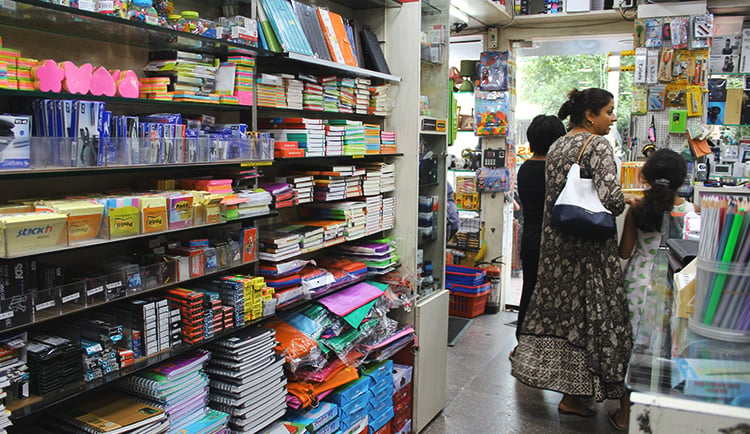
The stationery industry is divided into paper and non-paper segments. The paper segment includes notebooks, writing pads, and drawing books and accounts for around 42% of the Indian stationery market by value. It largely operates as a commodity market. The non-paper segment includes pens, pencils, erasers, crayons, glue, etc., and contributes nearly 58% of the market by value. Around 80% of demand comes from students and professionals, while the remaining 20% is driven by bulk orders from schools and corporates. Small and traditional stationery shops, account for nearly 70% of total sales. About 20% comes from direct institutional sales to offices, and only around 5% from modern retail chains such as D-Mart.
Around 80% of demand comes from students and professionals, while the remaining 20% is driven by bulk orders from schools and corporates. Small and traditional stationery shops, account for nearly 70% of total sales. About 20% comes from direct institutional sales to offices, and only around 5% from modern retail chains such as D-Mart.
What Shapes the Industry?
Consumption in this category is recurring, with on-the-spot purchases and no service or subscription component. Since products are commoditized, companies either compete on scale by selling low-priced products in large volumes or focus on premium offerings. March and April are peak months due to the back-to-school season, leading to a strong demand spike and making the Q1 the strongest for most companies.
Retail visibility is critical, as shopkeeper push often drives sales more effectively than advertising. Hence, companies prioritize shelf and counter visibility. Mass media advertising remains limited, with most investments directed toward expanding distribution and geographic reach. Companies such as Flair and Camlin have built extensive networks with over 3 lakh touchpoints. Brand loyalty is limited, and consumers easily switch if their preferred brand is unavailable.
Low entry barriers have led to thousands of local pen and pencil manufacturers. While manufacturing entry is easy, long-term success requires economies of scale, large production capacity, and a wide distribution network. Building a pan-India presence is challenging, as products must secure shelf space across thousands of stores to achieve profitability.
Trend of Premiumization
A gradual premiumization trend is visible, with Indian consumers increasingly shifting toward branded stationery for better quality. In the unorganized segment, manufacturers operate at low margins due to the absence of brand pull, and retailers promote products only when offered higher margins.
Branded players command a larger value share and enjoy better margins due to brand demand. Retailers are willing to stock established brands like DOMS even at slightly lower margins compared to unknown products, as customer pull remains strong.
Raw materials such as graphite and pulp influence costs, and bulk procurement helps reduce volatility. Price fluctuations impact unorganized players more severely, while organized players operate with 30–40% margins, providing a cushion against rising raw material prices.