

Deep Dive Into EMS Sector
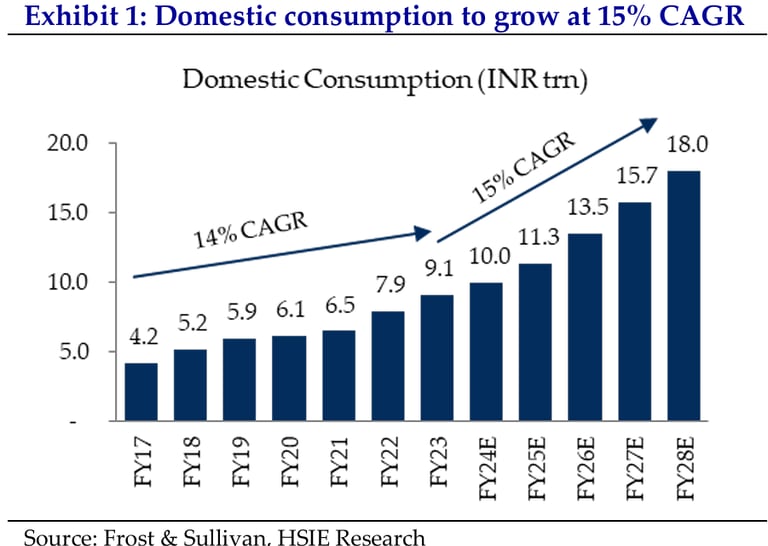
Indian exports have increased nearly 8 times over the last 11 years, and a large chunk of this growth has been driven by the Electronics Manufacturing Services (EMS) sector. However, despite this strong macro trend, the Indian EMS sector is currently going through a rough patch. Players like Dixon Technologies and Kaynes Technology are witnessing a slump, with Dixon potentially facing its worst phase since 2018.
Explaining the EMS Chain
At the start of the EMS value chain are component manufacturers. Semiconductor chips are designed and manufactured primarily in Taiwan and the US, and fabricated in massive facilities across Taiwan, Korea, and the US. Displays largely come from China and Korea, while capacitors and resistors are dominated by Japanese firms. At the end of the chain are the product owners or OEMs like Apple and Xiaomi, who decide how the product will look, its features, pricing, and positioning.
EMS companies sit right in the middle. They do not have any say in how phones or devices are designed or sold. Their role is to take a finished product design and convert it into a fully assembled product with zero defects. In short, EMS players are in the business of large-scale assembly, where execution efficiency is everything.
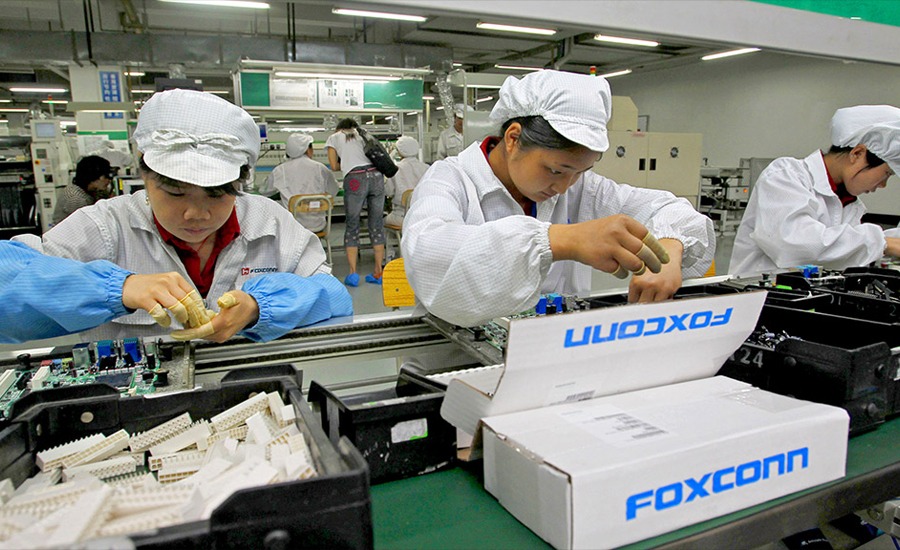
In short, EMS players are in the business of large-scale assembly, where execution efficiency is everything. For example, Apple, which owns the IP and decides the product design, features, and pricing, gives the manufacturing contract to Foxconn, which procures components and assembles the iPhone.
Structural Risks in the EMS Model
This structure exposes EMS companies to a key risk: lack of pricing power. The large brands that contract EMS players own the IP, while EMS companies have little control over the final product or the sourcing of raw materials. This significantly limits the share of value they can capture from the value chain. Millions of laptops and smartphones are manufactured every year, but the product variety is limited, making the business highly competitive and commoditized.
In contrast, low-volume, high-mix manufacturing such as automotive systems, defense equipment, or MRI machinesoperates very differently. These products have low volumes but are subject to strict regulatory requirements and must function flawlessly for many years. Customers cannot easily switch suppliers due to high switching costs and regulatory approvals, giving manufacturers stronger pricing power.
Risk vs Reward: Turnkey vs Consignment Models
In a turnkey model, the EMS company handles everything end-to-end. It sources all components, manages supplier relationships, and bears inventory and pricing risk. While this model carries higher risk, it also offers scope for better margins. Most Indian EMS players operate under this model.
In a consignment model, the OEM owns the components. Critical parts like chips and batteries are procured by the OEM and shipped to the EMS factory. Here, the EMS company faces much lower inventory and price risk, but margins are also lower. However, risks still exist. If critical components are delayed as production comes to a halt. If demand drops suddenly, the company may be stuck with inventory it has already paid for.
Living on Thin Margins
In most electronic products, components account for nearly 70% of total cost. EMS companies typically procure these components and pass them through at near cost. Their earnings come from the remaining 30%, which includes assembly, logistics, and testing. Since EMS players have no pricing power and their work can be easily replicated, margins remain brutally thin typically 2–4%. The real challenge is scaling revenue. EMS is a business with extremely high fixed costs such as factory equipment, machinery, power, and labor. When volumes increase, operating leverage improves margins significantly. But when volumes fall, the reverse happens very quickly, leading to sharp margin compression.
Working Capital: The Hidden Battle
If an EMS company receives an order, it usually needs to pay suppliers within 30–60 days, while large OEM customers may take 60–90 days after receiving goods to make payments. Since EMS players pay for components faster than they receive money for finished goods, a large amount of cash remains tied up for long periods. Even if two EMS companies have similar revenue, working capital efficiency can be a major competitive advantage. Dixon Technologies, for instance, historically benefited from a structure where it received payments from customers even before paying its suppliers, significantly improving cash flows.
The PLI Factor
Compared to China and Vietnam, India initially struggled to attract OEM manufacturing due to weak logistics, higher interest rates, and heavy dependence on imported components. Compared to China and Vietnam, India initially struggled to attract OEM manufacturing due to weak logistics, higher interest rates, and heavy dependence on imported components. So far, over ₹23,000 crore has been paid under PLI, with nearly ₹5,700 crore going to electronics manufacturers. However, PLI is temporary, and mobile manufacturing incentives expire in 2026.Only those companies that have used PLI to build scale, efficiency, and sustainable cost structures will survive once incentives are withdrawn. Others may struggle to remain viable.